

Halo semuanya. Apa kabar? Ketemu lagi sama saya, Iman Prabawa. In this article, I want to talk to you about the meaning of [ABG] in Indonesian. As always, we will watch movie scenes and whatnot where it is spoken.
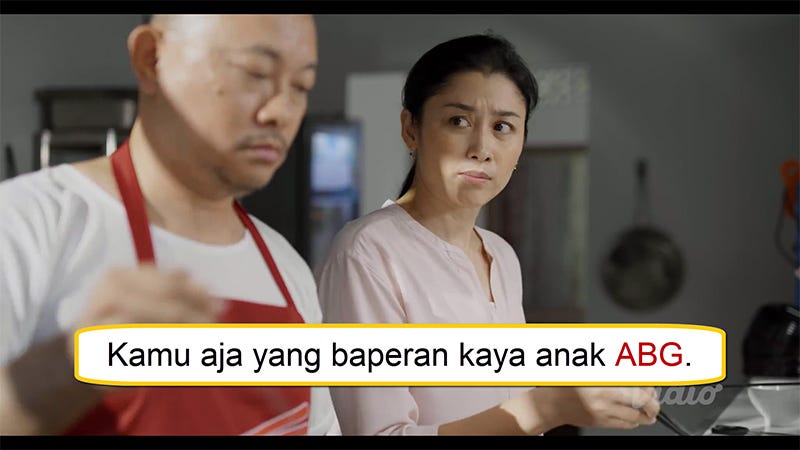
ABG or Abege in Indonesian
ABG, sometimes written as [abege], is an acronym for Anak Baru Gede, which literally means teenagers. When saying ABG or [abege], usually Indonesians add the word [anak] in front, so it becomes [anak abege] or [anak ABG].
It can mean the literal meaning of teenagers, but sometimes, when people refer to [abege], it has a negative connotation. The stereotype of [anak abege] is someone unstable in emotion, who can not think thoroughly when faced with difficult situations, and can not reason.
How to Pronounce ABG
Here is how you pronounce ABG in bahasa Indonesia.
Now, let’s watch examples from movies and whatnot where the word [abege] is spoken.
Example of ABG in Use
The first clip we are about to watch is from Di Bulan Suci Ini..., Season 1, Episode 1 (2023). Let’s watch the clip below.
Conversation from the clip with English translations.
Caroline: Wih, baju gua banyak yang laku nih. (Nice! I sold lots of clothes today.)
Santo: Baju mulu diurusin! Bantuin napa? Gini-gini, ini toko bakmi ini, yang biayain si Stef sampe sekolah. Udahlah! Berhenti banding-bandingin toko gua ama toko lu. (You only care about your clothes! Why don’t you give me a hand here? This noodle shop, in fact, is the one that paid for Stef’s tuition. Come on! Stop comparing my shop with your shop.)
Caroline: Siapa juga yang banding-bandingin? Aku kan cuma cerita kalo hari ini bajuku banyak yang laku. Kamu aja yang baperan kaya anak ABG. (Who’s comparing? I’m not comparing! I just said that today my clothes are selling a lot. You’re the one who easily gets emotional hearing that. You’re just like a teenager.)
Stefani: Aku ngga baperan padahal aku ABG. (I do not easily get emotional, even though I’m a teenager.)
Santo: Eh, eh, eh! Mo ngapain lu? (Hey, hey, hey! What are you doing?)
In this clip, Santo’s day is hectic because many people buy noodles from his noodle shop on that day. At that moment, his wife, Caroline, comes and says that her online shop is selling a lot of clothes that day. Hearing this, Santo suddenly becomes insecure and says that even though he is only selling noodles, his noodle shop pays their daughter’s school tuition fee. He feels like his wife is comparing his noodle shop with his online clothing shop.
Then Caroline, her wife, says the word ABG, and by saying that, she indirectly says that ABG is unstable and gets emotional easily, just like his husband at that moment.
Then, Stefani, out of nowhere, heard that and said that even though she is also a teenager, she does not easily get emotional or unstable.
Vocabulary From the Clip
[Wih] is a word used when someone is surprised because of something. In this context, Caroline was surprised because her online clothing shop sold a lot of clothing that day.
[Baju] = clothes.
[Gua] is informal for [saya] = I. For a detailed explanation, you can read my article here:
Gue In Indonesian

Halo semuanya. Apa kabar? Ketemu lagi sama saya, Iman Prabawa. Today, we’re going to talk about what [gue] means in Indonesian. As always, I’ll show you some examples from movies, YouTube videos, comics, and other real-life situations where Indonesians use this word.
[Lu] is informal for [Anda] = you. For a detailed explanation, you can read my article here:
Loe In Indonesian

Halo semuanya, apa kabar? Ketemu lagi sama saya, Iman Prabawa. In this article, I want to talk about the meaning of the word [loe] in bahasa Indonesia. Not only talk about the meaning of the word, but I will also show you some examples from movies and other real-life situations where Indonesians use this word.
[Mulu] is short for [melulu]. It means again and again.
[Diurusin] is the informal way of saying [diurusi] = taken care of. It comes from the base word [urus] with added suffix and prefix, di-in.
[Bantuin] is used when you ask for help; the base word is [bantu] = help.
[Napa] is short for [kenapa] = why.
[Gini-gini] is usually used when you compare something with something. In this context, Santo compares his noodle shop to his wife’s online clothing shop.
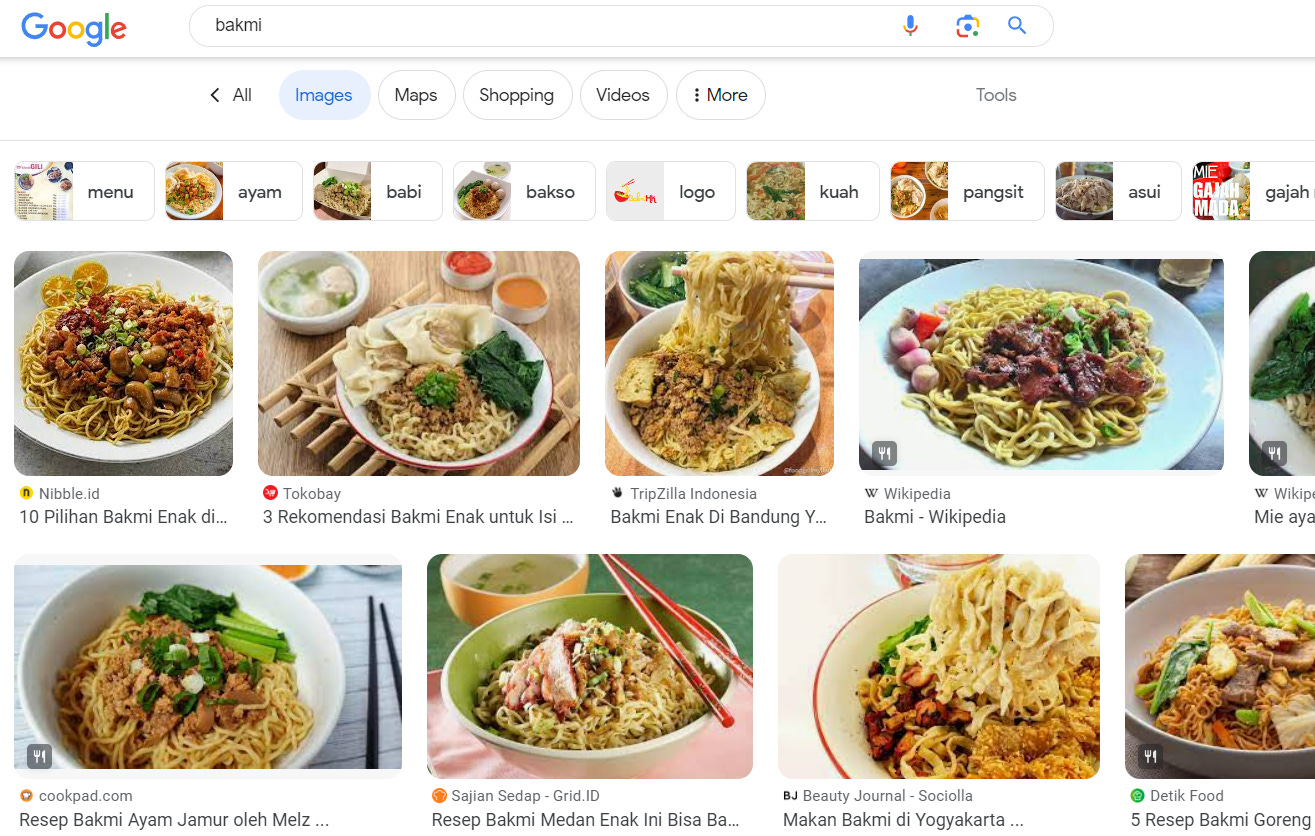
[Bakmi] = noodle, one of the Indonesian dishes that looks like this.
[Aja] is short for [saja] = just.
[Baperan] is someone who easily gets emotional. For more about this, you can read my article: Baper in Indonesian.
[Sampe] is informal for [sampai] = until.
[Banding-bandingin] is the conversational way of saying [membanding-bandingkan] = to compare something with something.
[Mo ngapain lu?] is literally translated to English as [What are you going to do?].
[Eh] is used when you want to attract someone’s attention. For more about this, you can read my article here: Eh In Indonesian.
If you found this article helpful and would like to support my work, you can buy me a coffee. Thank you for your support!
So, that’s gonna be it for now. If you have any questions, feel free to leave them in the comments below. Thank you for reading my article, and I’ll see you soon.