

Halo semuanya. Ketemu lagi sama saya, Iman Prabawa. In this article, I want to talk to you about the meaning of the word [anjir] in Indonesian. As always, we will watch scenes from movies and whatnot where the word [anjir] is used by Indonesians to better understand this.

Meaning of Anjir
[Anjir] can be used to curse or express your emotions when you are amazed or surprised by something. It is a euphemistic word for the word [anjing] because if you say the word [anjing], it is considered too harsh by Indonesians.
Other euphemism words for [anjing] are [anjay] and [anjrit]. [Anjir], [anjay], and [anjrit] all have the same meaning. You can pick one that sounds good to your ears.
Here is an example I took from an Indonesian group that discusses computers. I found the word [anjir] being used there.
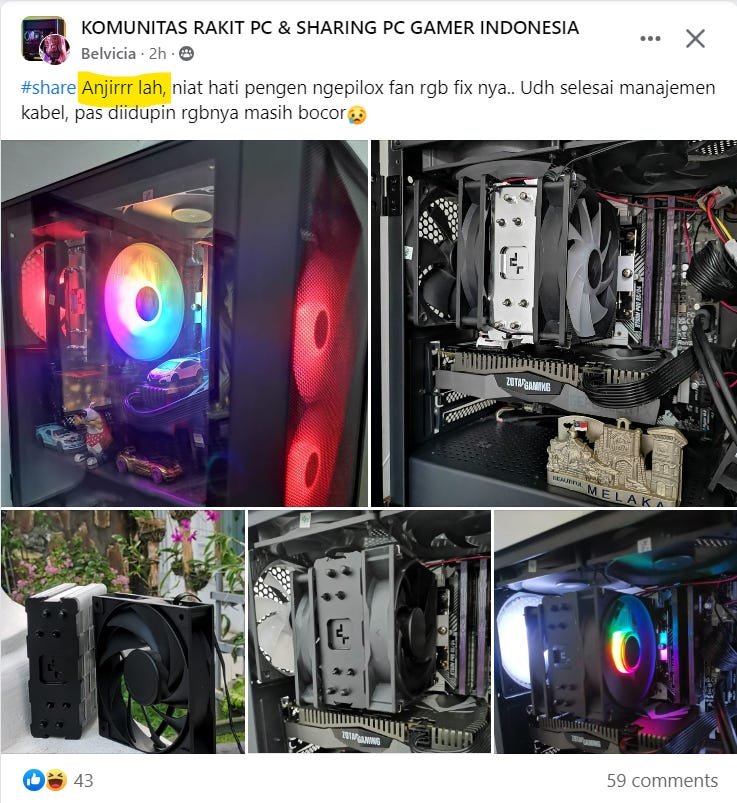
This person says:
Anjirlah, niat hati pengen ngepilox fan RGB fixnya. Udh selesai manajemen kabel, pas diidupin RBGnya masih bocor. (Damn it! I intend to paint the RGB Fix fan black. After doing the cable management, I turn it on, but the RGB is still on.)
So, [anjir], in this context, is used by the speaker to curse. The speaker uses a lot of daily conversational words here.
[Pengen] is the conversational way of saying [ingin] = want.
[Udh] is shortened from [sudah] = already.
[Diidupin] is the conversational way of saying [dihidupkan] = to turn it on.
How to Pronounce Anjir
This is how you pronounce the word [anjir] in bahasa Indonesia.
Next, let’s look at examples of Indonesians using this word in daily conversations, from movie scenes to whatnot.
Examples of Anjir In Use
The first scene we are about to watch is from YOLO! Episode 1 (2023). Let’s watch the clip below.
Conversation from the clip with English translations.
Dita: Mu! Gila, lo makan banyak banget, anjir! Lo bener-bener harus medical check up deh! Satu gigit martabak aja sama dengan lo lari satu jam di treadmill, tau ngga? Apalagi lo makan seloyang gini. (Mu! Oh my God, you ate so much! You need to take a medical checkup for this! One bite of martabak that you ate is equal to running on the treadmill for one hour, you know? And you ate the whole tray!)
Ummu: Dita. Ngapain hidup sehat kalo ngga bisa dinikmatin? Kan ujungnya bakal mati juga. (Dita. What’s good about living healthily if you can’t enjoy your life? We all end up dead, after all.)
In this clip, the moment Ummu is stuffing her face is surprising Dita. That’s why Dita says the word [anjir] to express her surprise at how much food Ummu has eaten.
Actually, Dita uses two words to express her surprise: [gila] and [anjir] in this scene. Both of those words are used by Dita to express her shock about how much food Ummu has eaten.
Vocabulary From the Clip
[Gila] means crazy, but in this scene, the word [gila] is used to express surprise. Dita is shocked at how much food Ummu ate. For more about this, you can read my article here: Gila in Indonesian.
[Lo] is informal for [kamu] = you. For more about this, you can read my article here: Lo Meaning In Bahasa.
[Makan] = eat.
[Banget] is an informal word for [sekali]. [Banyak banget] = [banyak sekali] = so many.
[Bener-bener] is informal for [benar-benar] = truly, really. In this scene, [bener-bener] is used by Dita to emphasize that Ummu really needs to do a medical checkup. [Bener-bener harus] = really needs (to do something).
[Satu gigit] = one bite.
[Martabak] is one of the most popular street foods in Indonesia. Usually, in Indonesia, there are two kinds of martabak: martabak manis and martabak telur.
Martabak manis looks like in the photo below.
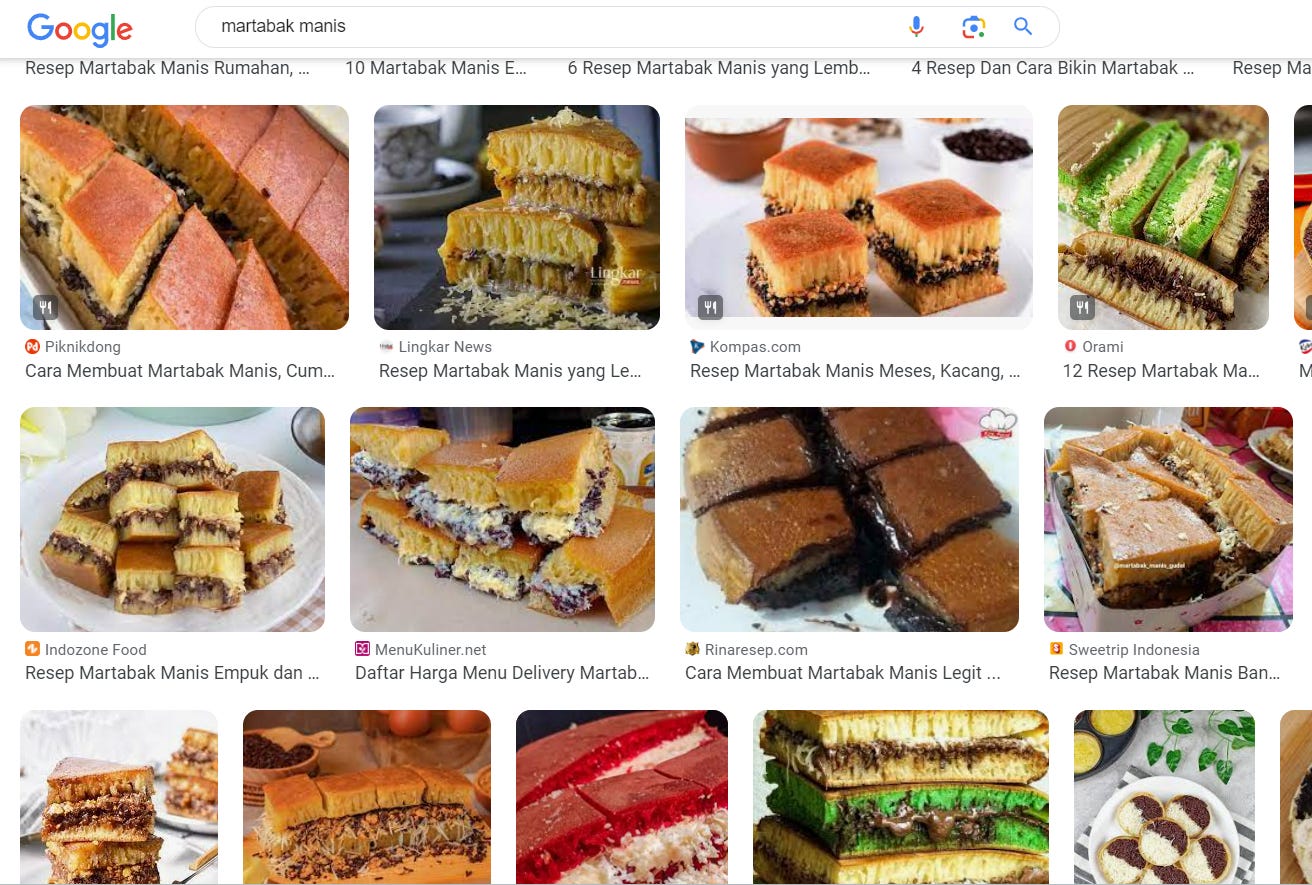
[Manis] means sweet, so martabak manis tastes sweet. Some places in Indonesia call this martabak
[terang bulan], and some areas in Indonesia just call it [martabak manis].
Martabak telur is a savory martabak. It looks like this.
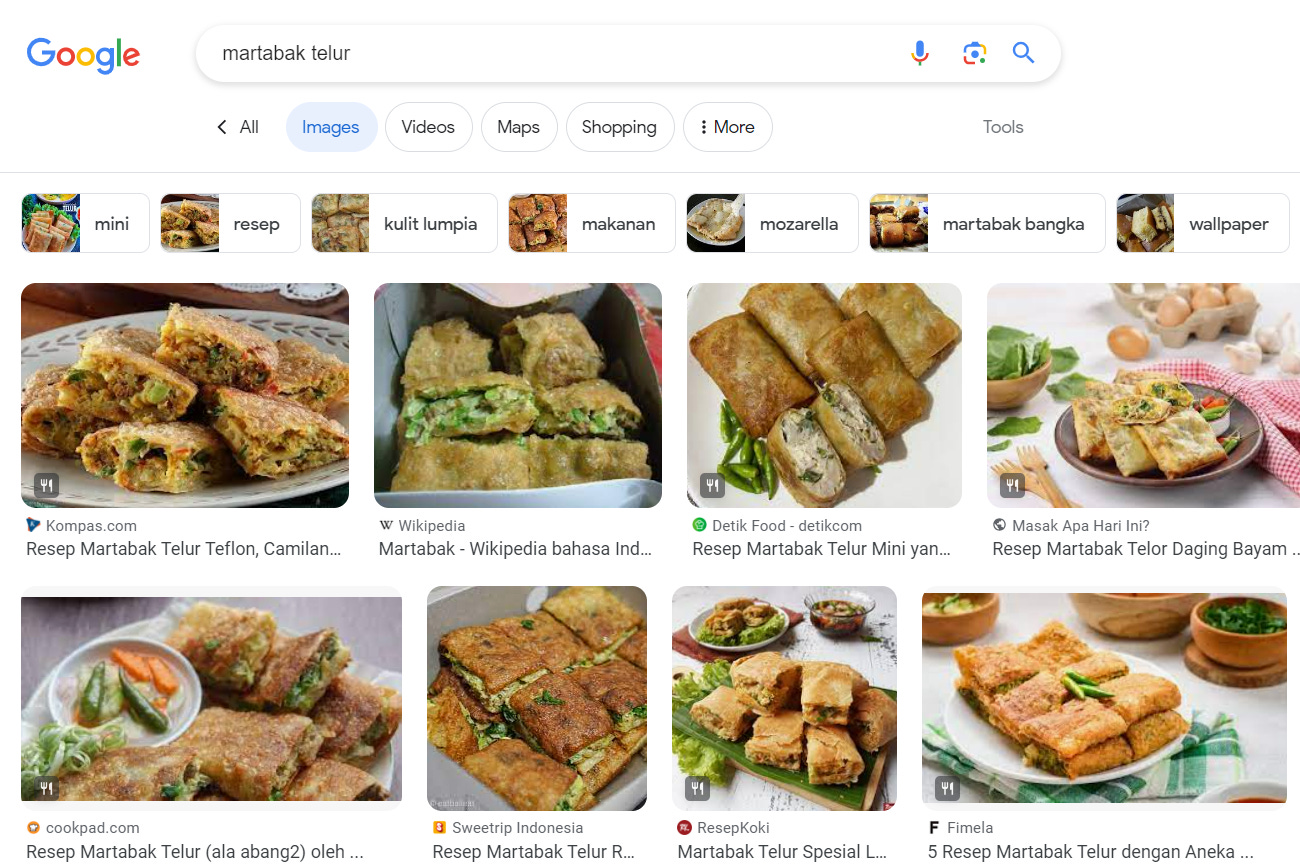
If you are in Indonesia, you have to try these two. What Ummu eats is [martabak manis] in the clip.
[Tau ngga?] = you know what?
[Lari] = run.
[1 jam] = [satu jam] = one hour.
[Apalagi] = not to mention, moreover.
[Seloyang] = [satu loyang] = one tray. Se in front of something usually means one, like in this example, [seloyang] means [satu loyang], [sepotong] means [satu potong (one piece)], [segigit] means [satu gigit (one bite)].
[Ngapain] in this scene has the same meaning as [buat apa] = what for, what’s the use, what’s good. [Ngapain] can also be used when you want to know what somebody is doing at the moment they are speaking. You can read my article here: How to Say What Are You Doing in Bahasa.
[Dinikmatin] is the colloquial way of saying [dinikmati] = to enjoy (something).
[Kan ujungnya] = in the end.
[Mati] = dead, die.
If you found this article helpful and would like to support my work, you can buy me a coffee. Thank you for your support!
That’s gonna be it for now. If you have any questions, feel free to leave them in the comments below. Thank you for reading my article, and I’ll see you soon.