
Gombal In Indonesian
An Informal Indonesian Word

Halo semuanya, ketemu lagi sama saya, Iman Prabawa. This time, I will talk about the meaning of the word [gombal], and as usual, we will watch clips from movies and whatnot where the word [gombal] is spoken by Indonesians.

So, let's talk about this word.
Gombal Meaning In Indonesian
According to Kamus Besar Bahasa Indonesia, here is the meaning of the word [gombal].
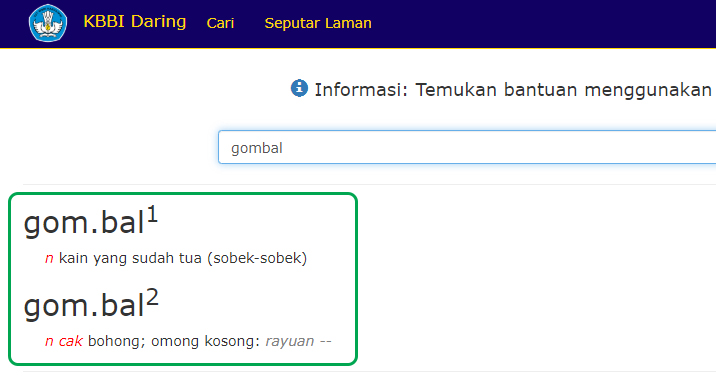
As we can see from the picture above, [gombal] in bahasa Indonesia has two meanings.
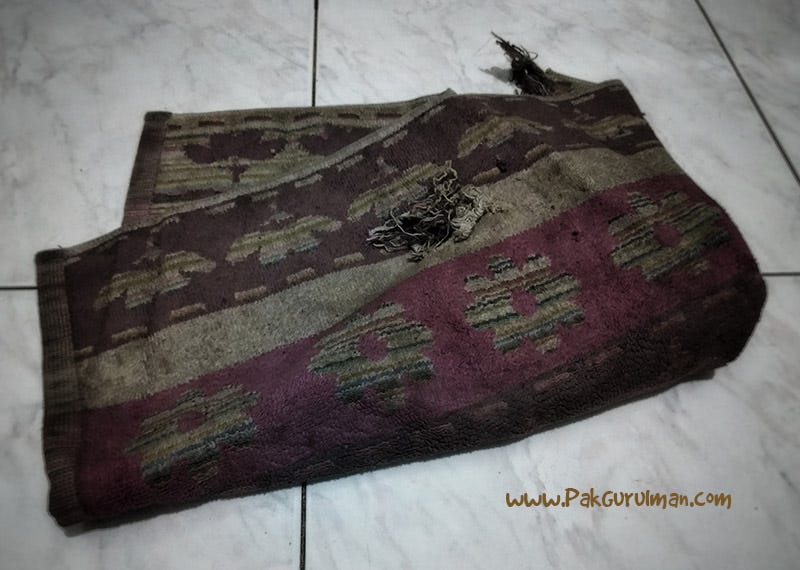
The first meaning of gombal is [kain yang sudah tua (sobek-sobek), which translates to English as [an old cloth that has torn apart].
You can see the picture below as an example of a gombal.
The second meaning of [gombal] is [bohong, omong kosong, rayuan], which translates to English as [lie, nonsense, sweet talk].
So, to know which one, we need to know the context first.
Example Sentences Using Gombal
Here are three example sentences using the word gombal.
The first example sentence:
Udah ah! Kamu itu ngegombalin aku terus deh. (You always sweet-talk me. Stop it!)
The second example sentence:
Eh, loe ada gombal ngga? Gue mau bersihin lantai yang kotor ini nih. (You have dirty clothes? I want to mop this dirty floor right here.)
The third example sentence:
Dia mah kerjaannya ngegombalin cewe mulu deh! (He always sweet-talks girls.)
Next, let’s hear how to pronounce the word [gombal].
How to Pronounce Gombal
Here is how you pronounce [gombal] in bahasa Indonesia.
Next, let’s look at examples where Indonesians use the word [gombal].
Examples of Gombal In Use
In this section, you will see examples of how Indonesians use the word [gombal] to better understand how to use it in a real-life situation.
The first clip we are about to watch is from Tertusuk Cinta Sate Padang (2017). Let’s watch the clip below.
Conversation from the clip with English translations.
Ryan: Gini aja. Saran gue itu, loe boleh ngga suka sesuatu karena loe membenci seseorang. Tapi bukan berarti loe harus membunuh kesukaan loe. (Here’s the thing. My advice to you is that you can dislike something all you want because you hate someone. But it doesn’t mean you must stop doing something you love.)
Audy: Ha? Maksud lo apa sih? Gua ngga ngerti. (What? What do you mean? I don’t understand.)
Ryan: Maksudnya.. Ya.. Intinya sih, gue pingin.. pingin aja ngelihat loe makan di warung gue. Karena kalo misalkan loe ada di warung gue, gue itu seperti melihat bidadari.. hihi.. yang lagi makan sate padang di warung gue. (What I meant was.. Hmm.. The thing is, I want.. I just wanna see you eat at my food stall. Because if you were there, in my food stall, it’d be like seeing an angel from heaven eating at my food stall.)
Audy: Ih! Apaan sih? Gombal banget! Ngga ah! Ngga mau. (Oh my God! What the hell? You sweet-talk me! Nope! I don’t wanna hear it.)
Ryan: Gombal, ya? (Sweet talk, isn’t it?)
Audy: Malah tambah ilfil gua dengerin lo ngomong kaya gitu. Aah. (Makes me wanna throw up to hear you speak like that. Oh.)
In this clip, Ryan sweet-talks Audy by saying [gue itu seperti melihat bidadari yang lagi makan sate padang di warung gue]. That sweet-talk word is called [gombal].
Vocabulary From the Clip
[Maksud loe apa sih?] is used when you don’t understand what somebody is saying to you. To make it formal, you change [loe] into [Anda] and drop [sih]. It becomes, “Maksud Anda apa?”
[Gue ngga ngerti] is a conversational way of saying [saya tidak mengerti] = I don’t understand.
[Ngerti] is short for [mengerti] = understand.
[Gue] = [gw] = [gua] = [w] is the informal way of saying [saya] = I. For more about this, you can read my article here: Gue In Indonesian.
[Loe] = [lo] = [elu] = [lw] is informal for [Anda] = you. For more about this, you can read my article here: Loe In Indonesian.
[Pingin] is the conversational way of saying [ingin] = want.
[Aja] is short for [saja] = just.
[Ngelihat] = [ngeliat] is the conversational way of saying [melihat] = to see. As you can see from the scene, Ryan uses [ngelihat] and [melihat], and it’s common to hear Indonesians use [ngelihat] and [melihat] interchangeably in daily conversation in Indonesia.
[Warung] = food stall.
[Sate] = chicken skewer.
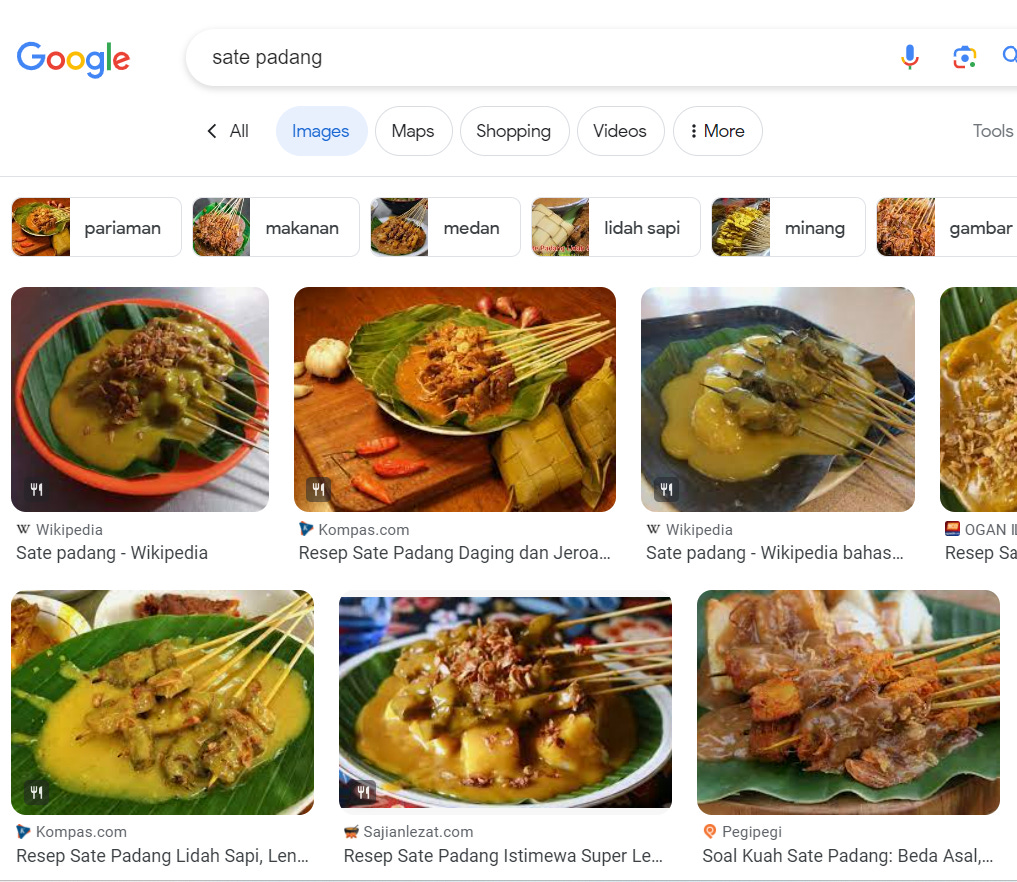
[Sate Padang] is an Indonesian dish from Padang, West Sumatra. It looks like the picture below.
[Apaan sih?] can have many meanings depending on the context. For more about this, you can read my article here: Apaan Sih In Indonesian.
[Ngga ah] is when you refuse someone’s offering.
[Ilfil] is a combination word from [ILang] and [FILing]. [Ilang] is short for [hilang] = to lose something, and [filing] comes from the English [feeling], but written in the Indonesian way. [Ilfil] is when you feel disgusted with the words or actions of other people. Audy wants to throw up in this clip when she hears Ryan’s sweet-talk words.
[Dengerin] is the conversational way of saying [mendengarkan] = to listen to.
[Ngomong] is the conversational way of saying [berbicara] = to speak (about something).
The second clip is from DOA: Cari Jodoh (2018). Let's watch the clip below.
Conversation from the clip with English translations.
Ali: Eh, Yok! Ntar loe ngegombalnya yang bener, Yok! Jangan ngomongin politik loe sama si Ayu! (Hey, Yok! You gotta make a nice, sweet talk! Don’t talk about politics with Ayu!)
Otoy: Bener! Loe kalo ngomong ngebosenin. Sejam berasa 60 menit ngobrol sama loe. Hehehe. (Agreed! Your talk is usually boring. One hour feels like 60 minutes talking with you. Hehehe.)
Ali: Emang harusnya berapa menit, Toy? (Actually, how many minutes should it be in one hour, Toy?)
Otoy: Orang biasanya tuh kalo botak di belakang, pinter. Ini bego! Eh! Lucu juga tuh die. Loe ngomongnya ye pas gombal sama si Ayu gitu, ye? Ngobrol sama kamu berasa cepet ya. Sejam berasa 60 menit. Hehehe. (People with baldness on the back of their heads are usually smart. But this one is a dumbass! Hey! I think that’s funny. So, when you’re talking to Ayu, talk like that, okay? Time really flies when talking to you. One hour feels like 60 minutes. Hehehe.)
Ali: Jadi yang bener berapa lama sih? (So, how long should it be, actually?)
[Gombal] in this clip refers to the sweet talk that Doyok will have when talking to Ayu, a girl whom Doyok likes.
Vocabulary From the Clip
[Eh] is used when you want to attract someone’s attention, usually when you want to talk about something. For more about this, you can read my article here: Eh Meaning In Indonesian.
[Ntar] has the same meaning as [nanti] = later. [Ntar] is usually used in conversational Indonesian.
[Ngegombal] = [melakukan gombal] = doing the sweet talk.
[Ngegombalnya] <--- [Nya] in this refers to when you are doing the sweet talk or [ngegombal].
[Ngomongin] is the conversational way of saying [membicarakan] = to speak (about something).
[Sama] = with.
[Bener] is the conversational way of saying [benar]. [Benar] is formal, and [bener] is informal.
[Ngebosenin] is the conversational way of saying [membosankan] = boring.
[Sejam] = [satu jam] = one hour.
[Ngobrol] is a synonym for [ngomong], and the conversational way of saying [berbicara] = to speak (about something).
[Emang] is short for [memang] and is usually used when you want to ask about something, like in this scene.
[Orang] can mean many things, and usually, it means people. But in this context, it means because.
[Botak] = bald.
[Pinter] is informal for [pintar] = smart.
[Bego] = stupid.
[Lucu] = funny.
[Die] has the same meaning as [dia] = she or he. The Betawi people usually change the letter [a] into [e] like in this example. This movie has a setting in Jakarta, where many Betawi people live and use the Betawi language.
[Pas] means when. For more about this, you can read my article here: Pas Meaning In Indonesian.
[Ye] in [gitu, ye?] has the same meaning as [gitu, ya?] = okay?
[Cepet] is informal for [cepat].
[Sih] falls in the category of phatic expression. It doesn’t have any meaning but delivers emotions to the sentence. For more about this, you can read my article: Sih In Indonesian.
The third clip is taken from a TV program called Opera Van Java. Let's watch the clip below.
Conversation from the clip with English translations.
Denny Cagur: Udah, udah, udah! Udah, udah! Ja-- Eh, eh, udah. Jangan suruh gue gombalin lagi ya. Gilang, gue ngga mau kalau disuruh lagi. Loe tahu ngga? Cinta itu bukan buat main-main! (Enough, enough, enough! Enough, enough! That’s enough. Don’t ask me to do the sweet-talking again. Gilang, I don’t want to do it again. You know what? Love is not a game to play with!)
In this clip, Denny Cagur is asked to sweet-talk Najwa Shihab, and then, after he sweet-talks Najwa, which in bahasa Indonesia is called [gombal], he says that love is not a game to play.
Vocabulary From the Clip
[Udah] is short for [sudah] = already.
[Suruh] means that you order someone to do something for you.
[Gombalin] is the conversational way of saying [menggombali] = to talk sweetly to someone.
[Cinta] = love.
[Main-main] is short for [bermain-main]. It means that you are not serious. You’re just doing it for fun.
If this article helped you at all, I would love it if you considered buying me a coffee.
That’s all for now. If you have any questions, feel free to leave them in the comments below. Thank you for reading my article, and I’ll see you soon.