

Halo semuanya, ketemu lagi dengan saya, Iman Prabawa. This time, I want to talk to you about the meaning of the word [kw] in the Indonesian language, and as always, we will watch scenes from movies where the word [kw] is spoken.

Meaning of KW
KW is an informal term. It stands for KWalitas. It defines the quality of a product. KW1 is the best quality, KW2 is the second-best quality, and KW3 is the third.
But we usually use the word KW to refer to fake goods. For example, if you see someone in Indonesia selling Nike shoes, he gives information that the product he sells is [barang KW]. It means that he sells fake Nike shoes, not the original Nike shoes. And if he gives information like these shoes are [KW super], it means that the shoes he sells are fake Nike, but are of good quality.
How to Pronounce KW
Here is how you pronounce KW in bahasa Indonesia.
Here is how you pronounce KW 1.
Here is how you pronounce KW 2.
Here is how you pronounce KW 3.
And here is how you pronounce KW super.
Moving on, we will see examples, mostly from movies, where those words [KW] are used by Indonesians.
Examples of KW In Use
In this section, I will gather examples from movies, YouTube videos, comics, and other media where the word [KW] is used.
The first example is from the movie Cek Toko Sebelah, Season 1, Episode 1 (2018). Let’s watch the clip below.
Conversation from the clip with English translations.
Pak Nandar: Kata kang Maman kamu orang Papua. Hehe. Tapi kaya orang Timur Tengah. (Mr. Maman said that you are Papuan. Haha. But you look like people from the Middle East.)
Martin: Kebetulan bapak saya turunan Turki, pak. (My father is of Turkish descent, sir.)
Tini: Ooo, Elif? (Oh. Elif, right?)
Martin: Aaa! Sapa itu? (Yeah! Who is Elif?)
Tini: Itu lho sinetron Turki. Tau ga? (It’s a Turkish soap opera. Don’t you know?)
Martin: Oh, mungkin, mungkin. (Oh, maybe, maybe.)
Tini: Ah! Turki KW nih! (You’re a fake Turkish then.)
Martin: Iya, kayanya. (Yeah, I guess.)
In this clip, Martin says that his father is of Turkish descent, and then Tini replies that if he were of Turkish descent, he must have known Elif, the famous Turkish soap opera. But Martin didn’t know about Elif, so Tini said, “KW nih!” to him.
Vocabulary From the Clip
[Kang] in kang Maman. [Kang] is an honorific title to address men in the Indonesian language. It comes from the Sundanese language, one of the vernacular languages in Indonesia. It has the same meaning as [mas]. The difference is that [mas] comes from the Javanese language.
[Kamu] = you.
[Orang] = people.
[Kaya] can mean [rich] and can also mean [like]. In this context, [kaya] means like.
[Turunan] is short for [keturunan] = descent.
[Sapa] is the colloquial way of saying [siapa] = who.
[Sinetron] = soap opera.
[Tau ga?] is usually said if you want to know whether the person you are asking knows about something.
[Kayanya] is said when you are uncertain about the truth of something.
The second example is from a movie called Kukira Kau Rumah (2021). Let's watch the clip below.
For the conversation from the clip above with English translations and vocabulary explanations, you can read my article here:
Anjrit In Indonesian

Halo semuanya. Apa kabar? Ketemu lagi sama saya, Iman Prabawa. This time, I want to talk about the meaning of the Indonesian word [anjrit], and as usual, we will watch scenes from movies where this word [anjrit] is spoken.
In this scene, Niskala calls Pram Chicco Jerikho KW2, which means that Pram looks like Chiccho Jerikho. Chicco Jeriko is an Indonesian actor. If you type his name into Google Search, you’ll get this:
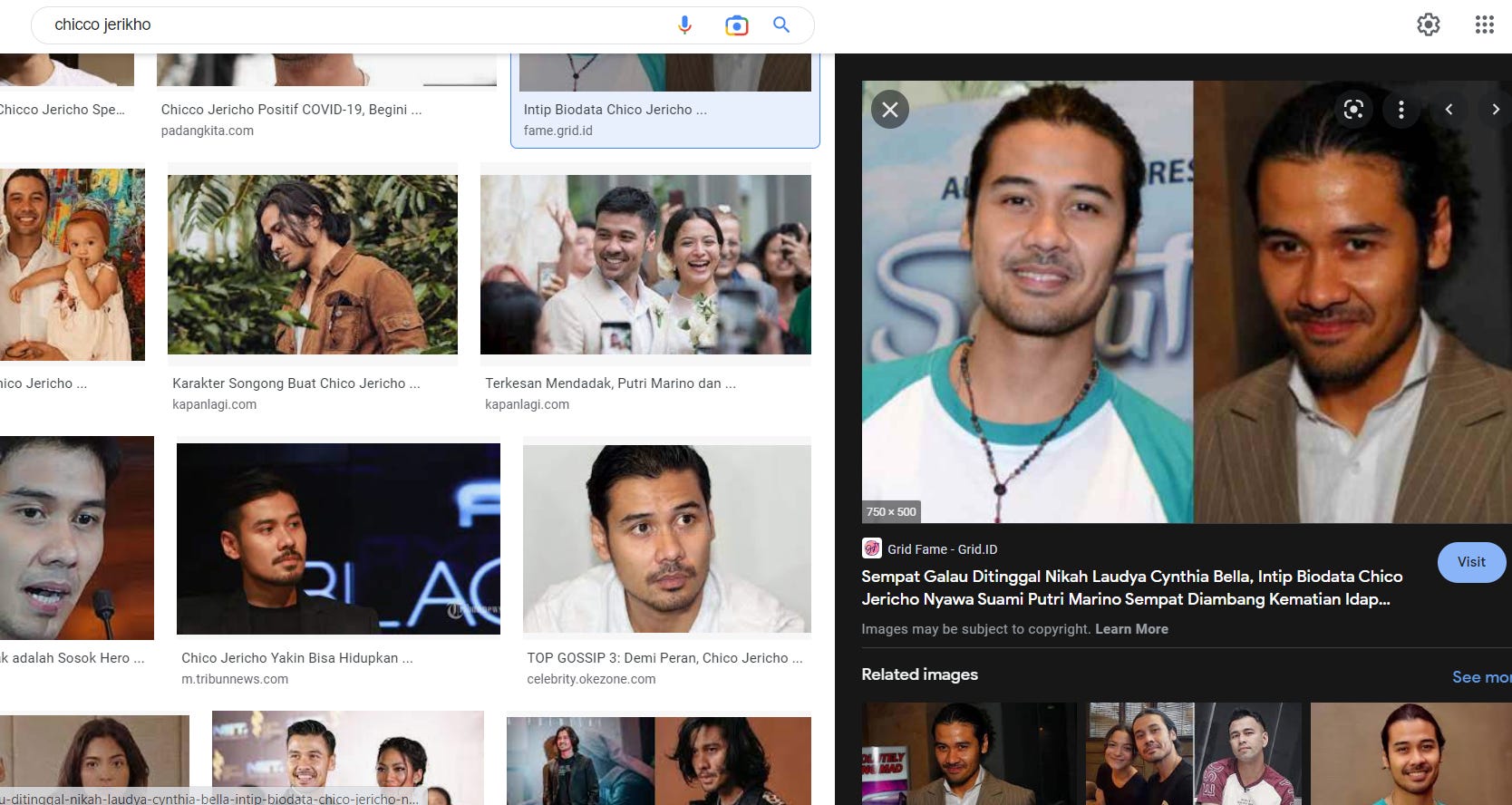
So, as you can see, Niskala sees Pram looks like Chicco Jerikho, but because Chicco Jerikho is a handsome guy, if she calls Pram just Chiccho Jerikho, then it would be a compliment to Pram. Niskala wants to mock Pram, and that’s why she adds the word KW, which in this context means, “Yeah, you look like Chicco Jerikho, but not at his best. You look like a kind of Chiccho Jerikho, but the bad version of him.”
As I mentioned earlier, the level of KW, KW super is the best quality, which is like the original quality of the goods being pirated. Niskala uses KW 2 here to mock Pram, who looks like Chiccho Jerikho but is the bad version of him. And when she says, “Chicco Jerikho KW 2,” all of a sudden, her friend, Dinda, is kind of laughing and says, “Anjrit, KW! (Dang! Fake goods! Fake goods level 2).” So, the word [KW 2] here is used by Niskala to mock Pram.
The third example is still from the same movie, Kukira Kau Rumah (2021). Let’s watch the clip below.
Conversation from the clip with English translations.
Niskala: By the way, lo udah naik kelas jadi Chicco Jerikho KW satu. (By the way, you’ve leveled up as fake Chicco Jerikho low-quality 1.)
Pram: Waah. Woi! Gue KW super! (Damn! Hey! I’m a fake high-quality Chicco Jerikho!)
It is really hard for me to translate this into English, so I just came up with that translation, and I will explain it to you.
In this scene, Niskala and Pram are getting closer. They hang out at the library together, kind of like a date, and when Niskala says that Pram has now leveled up into a better KW. Earlier, she called Pram Chicco Jerikho KW 2, which is lower in terms of quality than KW 1. And now, Niskala calls Pram Chicco Jerikho KW 1.
Maybe next time, when Niskala gets closer to Pram, she can say to Pram just Chicco Jerikho with no KW attached to it. Chicco Jerikho is a handsome guy, so if she calls Pram Chicco Jerikho, it means a compliment to him.
I hope you can understand this. When Niskala still messes around with him, saying he is a Chicco Jerikho KW 1, Pram replies with, “Gue KW super!” which, in this case, means Pram just responding to her making a joke about him.
Vocabulary From the Clip
[Lo] is informal for [Anda] = you. For a more detailed explanation, you can read my article here:
Loe In Indonesian

Halo semuanya, apa kabar? Ketemu lagi sama saya, Iman Prabawa. In this article, I want to talk about the meaning of the word [loe] in bahasa Indonesia. Not only talk about the meaning of the word, but I will also show you some examples from movies and other real-life situations where Indonesians use this word.
[Udah] is a common reduction for [sudah] = already.
[Naik kelas] = level up.
[Waah] here is just Pram’s reaction to Niskala’s words. It’s like saying [oh my God] or [damn].
[Woi!] is when you yell to attract someone’s attention. For a more detailed explanation, read my article here: Woi in Indonesian.
If you found this article helpful and would like to support my work, you can buy me a coffee. Thank you for your support!
So, that’s gonna be it for now. If you have any questions, feel free to leave them in the comments below. Thank you for reading my article, and I’ll see you soon.