

Halo semuanya, ketemu lagi sama saya, Iman Prabawa. In this article, I want to talk to you about the meaning of the word [mudik] in Indonesian, and as always, we are also going to be watching examples from movies, YouTube videos, comics, and other sources where Indonesians use the word [mudik].
Mudik In Indonesian
[Mudik] is the Indonesian word for the tradition of returning to your hometown or place of origin, especially when you live in a big city. People usually mudik during major holidays, particularly Eid al-Fitr, as well as the Christmas and New Year holidays.
[Mudik] has a similar meaning to [pulang kampung]. [Pulang] means “to go home” or “to return home,” while [kampung] literally means “village,” although in this expression it refers to someone’s hometown or place of origin.
Related articles:
Pulang Kampung In Indonesian

Halo semuanya, ketemu lagi sama saya, Iman Prabawa. This time, I want to talk to you about the meaning of the Indonesian phrase [pulang kampung]. As always, we are also going to be watching examples from movies, YouTube videos, and other sources where Indonesians use the phrase.
For example, suppose you are originally from Brebes, Central Java, but you move to Jakarta for work. You live and work in Jakarta, and when Eid al-Fitr comes around, you travel back to your hometown, Brebes, and stay there for a week or two. This activity of returning to your hometown during the Eid al-Fitr holiday is called [mudik] or [pulang kampung].
Here are some examples of how [mudik] is used:
1. Menteri Perhubungan prediksi jumlah warga yang mudik Natal 2023 dan Tahun Baru naik 43 persen dari tahun lalu. (The Minister of Transportation predicts that the number of people traveling to their hometown for Christmas and New Year will increase by 43 percent from last year.)
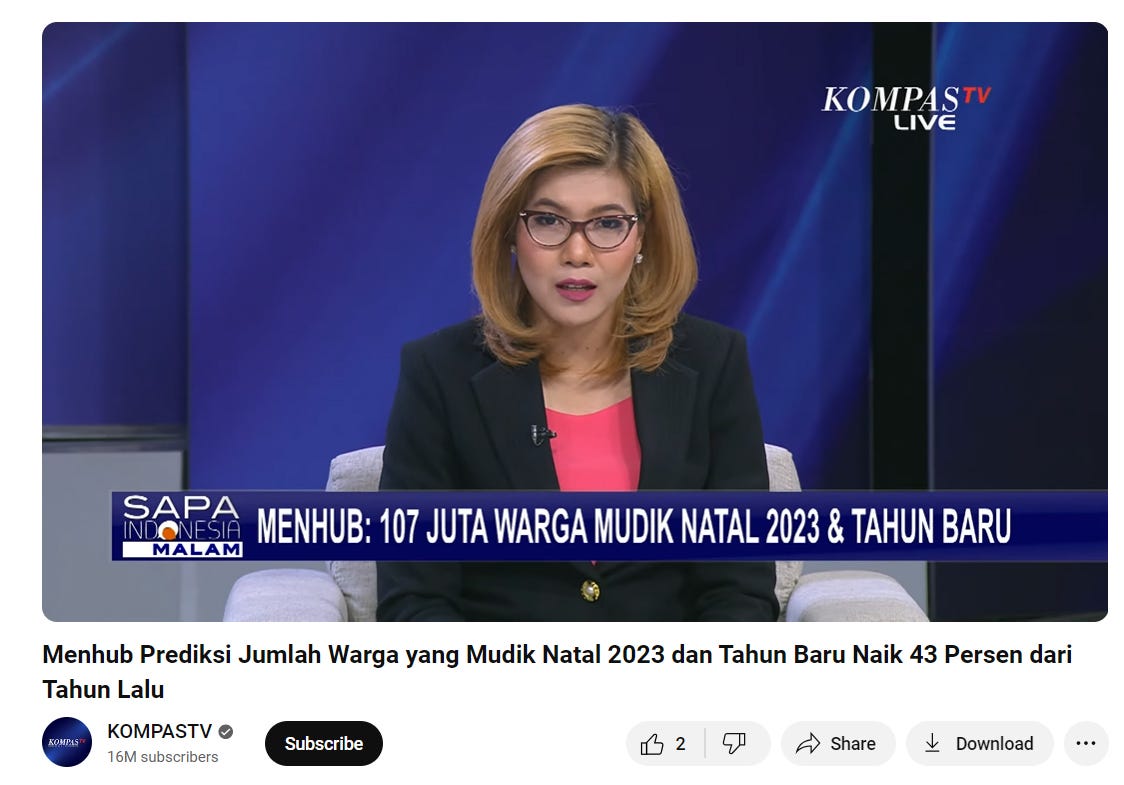
Menhub stands for Menteri Perhubungan.
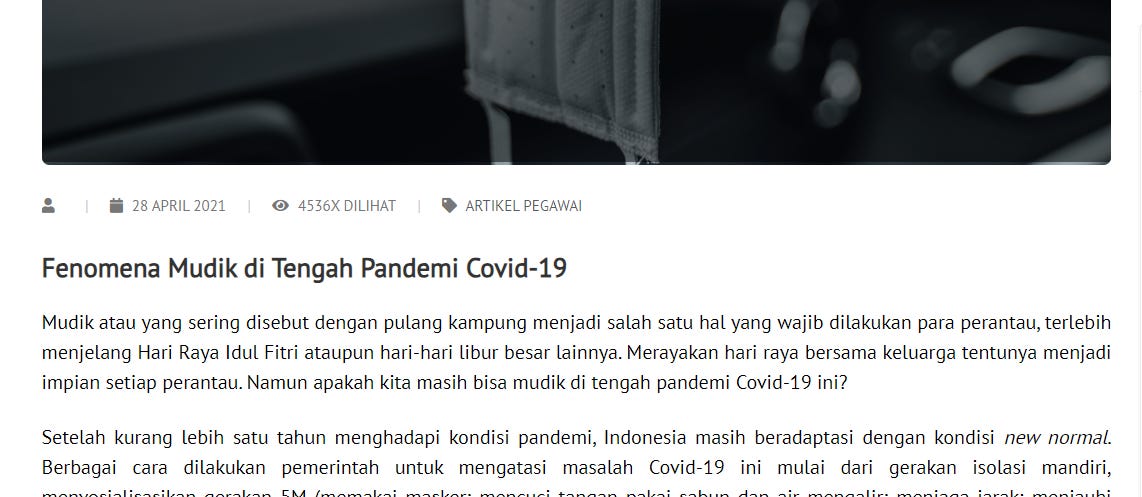
2. Fenomena mudik di tengah pandemi COVID-19. (The phenomenon of people returning to their hometown during the COVID-19 pandemic.)
3. A: Loe Lebaran tahun ini, mudik nggak? (Are you going to your hometown for Eid this year?)
B: Mudik dong, pastinya. (Yeah, absolutely.)
A: Mudik ke mana loe? (Where to?)
B: Ke Pekalongan. (Pekalongan.)
How to Pronounce Mudik
Here is how you pronounce [mudik] in Bahasa Indonesia.
Next, let’s watch examples where Indonesians use the word [mudik].
Examples of Mudik in Use
The first example we are about to watch is taken from Di Bulan Suci Ini... Episode 1 (2023). Let’s watch the clip below.
Below is the transcript from the clip, along with the English translation:
Ama: Kalian mo ke mana? Masa iya nganter paket? (Where are you guys going? You can’t tell me you’re delivering packages.)
Sri: Duh. (Oh, come on.)
Ama: Kok rame? (Why are all of you going?)
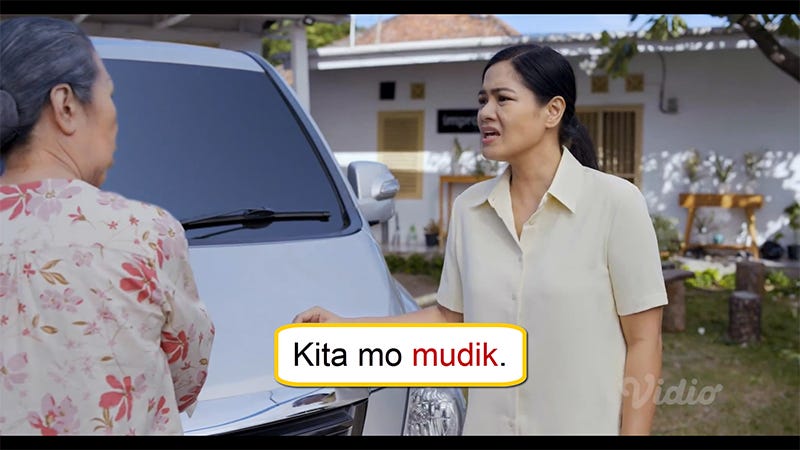
Sri: Duh Ama ngapain sih? Ah.. Kita.. Kita.. Kita mo mudik. (Oh, Ama, what are you doing? Ah... We... We... We’re going back to our hometown for Eid.)
Ama: Ha? Orang si mbok bilang kalian ngga mudik tahun ini. (Huh? Mbok told me you guys weren’t going home for Eid this year.)
In this clip, Ama asks where they are going because the whole family is going together. This seems unusual to her because people don’t normally deliver packages accompanied by their entire family. She doesn’t believe that they’re all going to deliver packages. That’s why she says, “Masa iya nganter paket? Kok rame?”
Sri then replies, “Kita mo mudik.” This makes sense because when people go mudik, they often travel with their whole family, although this isn’t always the case.
Vocabulary From the Clip
[Kalian] = you guys.
[Mo] is informal for [mau] = want.
[Nganter] is the colloquial way of saying [mengantar] = to deliver.
[Duh] is used to express panic, disbelief, or frustration. [Duh] is a common reduction of [aduh].
[Rame] is informal for [ramai] = crowded.
[Kok] is used when you want to ask about something. For more on this, you can read my article: Kok in Indonesian.
[Ngapain] means [apa yang Anda lakukan] here = what are you doing. [Duh Ama ngapain sih?] = [Aduh Ama, Apa yang Anda lakukan?]
[Orang] = people, because.
If you found this article helpful and would like to support my work, you can buy me a coffee. Thank you for your support!
This wraps up today’s article. If you have any questions, you can leave them in the comments below, and I’ll be happy to answer them for you.
Thank you for reading my article, and I’ll see you soon.