

Halo semuanya, ketemu lagi sama saya, Iman Prabawa. In this article, I want to talk to you about the meaning of the word [beut] in Indonesian. As always, we will also look at examples where the word [beut] is used and spoken by Indonesians.
Meaning of Beut or Bet
[Beut] is considered slang in Bahasa Indonesia. Some Indonesians write it as [beut], and some write it as [bet]; both mean the same thing.
[Beut] or [bet] means [very] in English. [Beut] or [bet] has the same meaning as [banget] and [sekali]. [Banget] is considered a colloquial word, and you will hear it in daily conversation in Indonesia, whereas [sekali] is more formal.
Example sentences:
Gue laper beut. (I’m very hungry).
Aku laper banget. (I’m very hungry).
Saya lapar sekali. (I’m very hungry).
The three sentences above mean the same thing. The first sentence is considered slang, the second sentence is more often heard in daily conversation, and the third sentence is the most formal of all.
How to Pronounce Beut
Here is how you pronounce [beut] or [bet] in Bahasa Indonesia.
Moving on, let’s look at examples where the word [beut] or [bet] is used and spoken by Indonesians.
Examples of Beut in Use
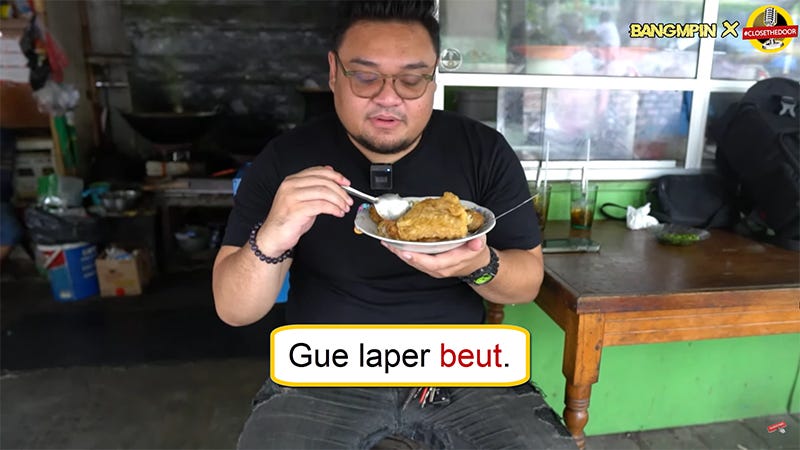
The first example we are about to watch is from Bang Mpin’s YouTube channel. Let’s look at the clip below.
Below is the transcript from the clip, along with the English translation:
Bang Mpin: Amin. Pasca makan siang nih. Gue laper beut. Sayang, sambelnya habis. Nih! Mantep, ya? Tebel! Pake telor bebek lho. Takis? (Amen. It’s after lunch, and I’m starving. Too bad we’re out of sambal. Look at this! Pretty good, huh? Nice and thick! It’s made with duck eggs, you know. Dig in?)
Juru Kamera: Takis boss. (Dig in, boss.)
When Bang Mpin says, “Gue laper beut,” it means that he is starving.
Vocabulary From the Clip
[Juru kamera] = cameramen.
[Pasca] means after something.
[Makan siang] = lunch. [Makan siang] spoken here refers to [jam makan siang] actually.
[Jam makan siang] = lunchtime.
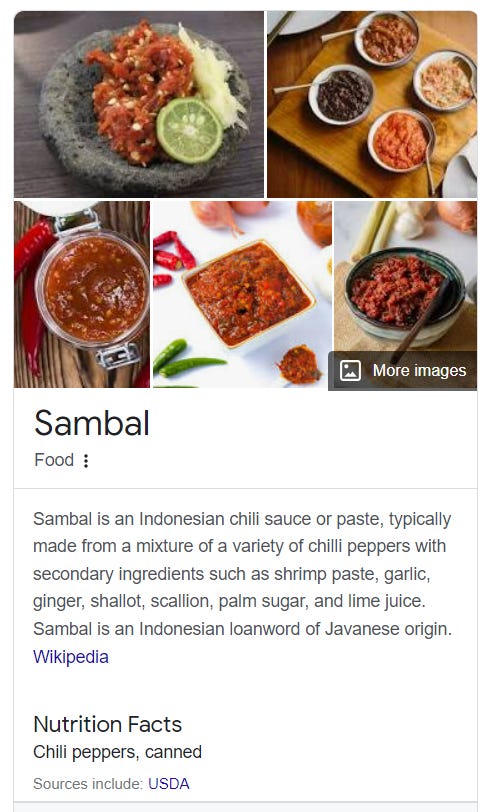
[Sambal] or [sambel] is an Indonesian chili sauce that looks like the picture below.
[Sayang] can mean honey and can also mean too bad.
[Habis] = running out.
[Nih] is informal for [ini] = this. For a more detailed explanation, see my article: Ini, Ni, and Nih in Indonesian.
[Mantep] = [mantap] = extremely well; excellently.
[Tebel] = [tebal] = thick.
[Pake] is informal for [pakai] = use.
[Telor] = [telur] = eggs.
[Bebek] = duck.
[Takis] means to do something immediately, but in this context, it means like, “Shall we eat?” For a more detailed explanation, see my article: Takis in Indonesian.
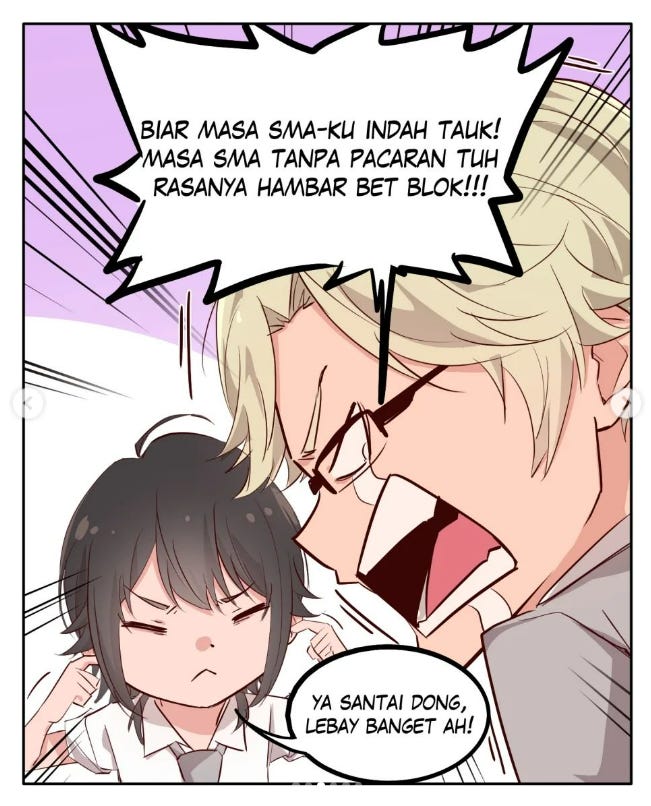
The second example is taken from a post by TTS Komik on Instagram. Let's look at the picture below.
Below is the conversation from the clip, along with the English translation:
Cowo: Biar masa SMA-ku indah tauk! Masa SMA tanpa pacaran tuh rasanya hambar bet blok!!! (I want my high school years to be great, you know! High school without dating just feels so damn boring, dude!)
Cewe: Ya santai dong. Lebay banget ah! (Hey, chill out. You’re being way too dramatic!)
Vocabulary From the Picture
[Cowo] = boys.
[Cewe] = girls.
[Biar] = [agar] = so that.
[SMA] stands for Sekolah Menengah Atas = high school.
[Indah] = beautiful.
[Tauk] = [tahu] = [tau] = know.
[Pacaran] = dating.
[Hambar] = tasteless.
[Tuh] is informal for [itu] = that. For a more detailed explanation, see my article: Itu, Tu, and Tuh In Indonesian.
[Blok] is short for [goblok] = stupid, idiot, moron.
[Ya santai dong] is used to calm someone down.
[Lebay] is when you are overreacting. For a more detailed explanation, see my article here:
Lebay In Indonesian

Halo semuanya. Apa kabar? Ketemu lagi sama saya, Iman Prabawa. In this article, I want to talk to you about the meaning of the word [lebay] in Indonesian. We will watch scenes from movies, YouTube videos, and whatnot where the word [lebay] is spoken, so you can see how Indonesian people use this word.
If you found this article helpful and would like to support my work, you can buy me a coffee. Thank you for your support!
That wraps up today’s article. If you have any questions, you can leave them in the comments below, and I’ll be happy to answer them.
Thank you, and I’ll talk to you soon. Bye for now!