

Halo semuanya, ketemu lagi sama saya, Iman Prabawa. In this article, I want to talk to you about the meaning of the phrase [naik daun], and as always, we are also going to be looking at examples from movies, YouTube videos, comics, and whatnot where Indonesians use the phrase.
Meaning of Naik Daun
[Naik daun], if translated word for word, means riding the leaves. This meaning makes absolutely no sense. And this is not the real meaning of the phrase.
[Naik daun] means something or someone that is currently on the rise, rising in popularity, and widely known by a lot of people.
Example sentence:
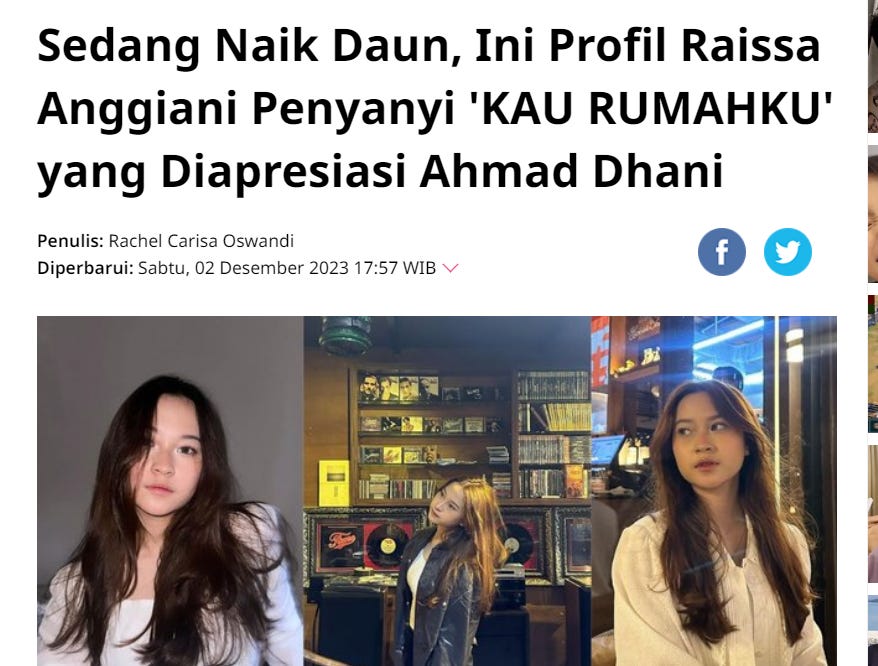
1. Sedang naik daun, ini profil Raissa Anggiani, penyanyi “Kau Rumahku” yang diapresiasi Ahmad Dhani. (Rising star Raissa Anggiani: A profile of the singer behind “Kau Rumahku,” who has received praise from Ahmad Dhani.)
2. Ketika daun pisang mulai naik daun. (When banana leaves start rising in popularity.)
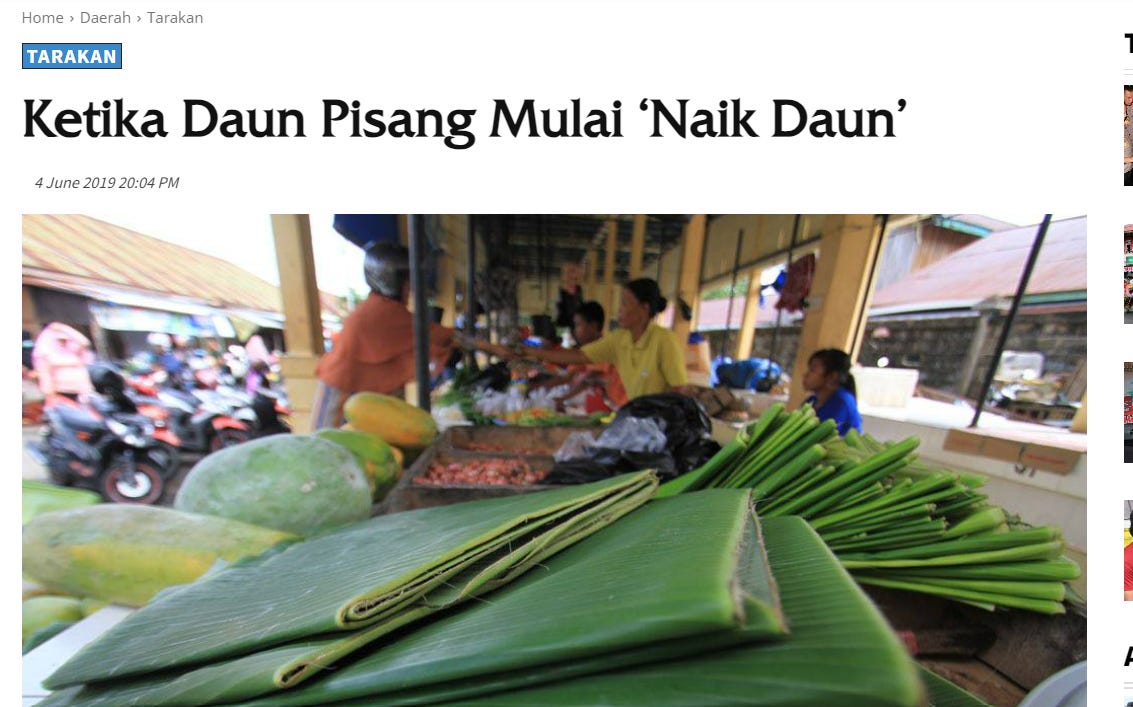
[Naik daun] in this example sentence means that the banana leaves are starting to be sought after and used by many people.
How to Pronounce Naik Daun
Here is how you pronounce [naik daun] in Bahasa Indonesia.
Moving on, let’s look at examples where Indonesians use the phrase [naik daun].
Examples of Naik Daun in Use
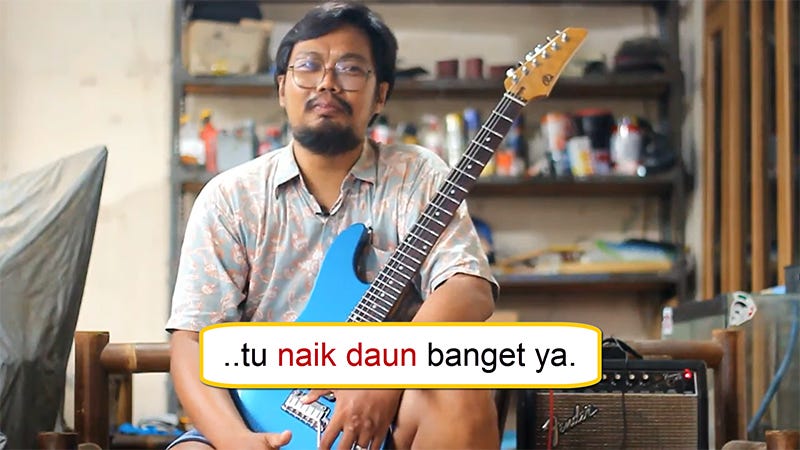
The first example we are about to watch is taken from Monstadz Guitar’s YouTube Channel. Let’s watch the clip below.
Below is the transcript from the clip, along with the English translation:
Jadi, sejak pandemi kemaren, merek gitar dari Ambarawa ini tu naik daun banget ya. Kalo kita lihat di sosial media seperti Instagram followers Instagramnya itu banyak banget ya. (So, this guitar brand from Ambarawa has really taken off since the pandemic, right? I mean, if you look at their social media, like Instagram, they have a ton of followers.)
So, [naik daun] in this context means rising in popularity. This guitar brand has become popular and has started to be used by a lot of guitar players.
Vocabulary From the Clip
[Jadi] = so.
[Sejak] = since.
[Tu] is a common reduction of [itu] = that. For more about this, you can read this article:
Itu, Tu, and Tuh in Indonesian

Halo semuanya, ketemu lagi sama saya, Iman Prabawa. In this article, I want to talk about the meaning of [itu], [tu], and [tuh] in Indonesian. And as always, we are going to be watching examples from movie scenes and whatnot where the word is spoken by Indonesians.
[Ini] = this. For more about this, you can read my article: Ini, Ni, and Nih in Indonesian.
[Banget] = [sekali] = very. For more about this, you can read this article:
Banget In Indonesian

Halo semuanya, ketemu lagi sama saya, Iman Prabawa. In this article, I want to talk to you about the meaning of the word [banget] in Indonesian. As always, we will also watch examples from movies where the word [banget] is spoken by Indonesians to better understand the meaning and how to use this word.
The second example is from Nex Carlos’s YouTube channel. Let’s look at the clip below.
Below is the transcript from the clip, along with the English translation:
Nex Carlos: Kak Salma dari Aceh? (Are you from Aceh?)
Salma: Iya. (Yeah.)
Nex Carlos: Acehnya di mana? (Where in Aceh?)
Salma: Aceh Pidie. (Pidie.)
Nex Carlos: Pidie? Wah! Lagi naik daun tuh kayanya Pidie, ya? (Pidie? Wow! Pidie seems to be getting pretty well-known these days, huh?)
Salma: Lagi naik daun ya, koh? (Oh, it is?)
Nex Carlos: Iya. Ini lagi banyak yang ini, ya? Lagi banyak yang mengungsi kayanya, ya? (Yeah. There seem to be a lot of refugees there these days, I suppose?)
Salma: Rohingya. (The Rohingya.)
Nex Carlos: Bener, ya? Di Pidie ya itu, ya? (Right? That’s in Pidie, isn’t it?)
Salma: Iya. (Yeah.)
Nex Carlos: Wah. Saya ke Aceh udah pernah. Tapi belum pernah ke Pidie. (Wow. I’ve been to Aceh before, but I’ve never been to Pidie.)
Salma: Belum pernah ke Pidie? Main ya koh, ya? (You’ve never been to Pidie? You should come visit sometime.)
Nex Carlos: Cuma.. (It’s just that...)
Salma: Mau liat pengungsi Rohingya? (You wanna see the Rohingya refugees?)
Nex Carlos: Oh, bukan. (Oh, no.)
In this clip, Nex Carlos is talking about Pidie, which is being talked about by many people right now. So, [naik daun] here means getting talked about by many people or getting popular.
Vocabulary From the Clip
[Kak] is an honorific title to address older people or females. For more about this, you can read this article:
Kakak In Indonesian

Halo semuanya, apa kabar? Ketemu lagi dengan saya, Iman Prabawa. This time, I'm going to talk about the meaning of [kakak] in bahasa Indonesia. We are also going to be watching examples from movies where the word [kakak] is used by Indonesians.
[Dari] = from.
[Koh] means older brother. It’s an honorific title to address someone for being polite. It’s like [bang] and [mas].
[Udah] is a common reduction of [sudah] = already.
[Liat] is the conversational way of saying [lihat] = to see, to look.
[Bener[ is informal for [benar] = true.
If you found this article helpful and would like to support my work, you can buy me a coffee. Thank you for your support!
This wraps up today’s article. If you have any questions, just leave them in the comments below, and I’ll be happy to answer them.
Terima kasih, and I’ll see you soon. Bye now!